Programming TYPO3 extensions / enhancements
TYPO3 extensions allow the TYPO3 system to be modified and/or expanded without having to change the TYPO3 core. This means that it can be updated at any time, despite the programmed extension.
Several thousand extensions can be downloaded from TYPO3.org, but it is of course also possible to program completely new extensions or expand existing extensions so that they meet your requirements exactly.
However, the premise should be to implement as many functions as possible with the existing extensions from the repository. A sensible combination is important here.
powermail
This form extension has been available since 2008. It allows users not only to create simple contact forms but also to set up many additional features. Users can save the entered data directly to any database table and automatically send personalized reply emails. For most websites, TYPO3’s built-in Forms extension is sufficient, but sometimes you might want a bit more in terms of functionality or interactivity.
Yoast_SEO
The Yoast SEO for TYPO3 extension enables clear on-page optimization of a website. It includes a dedicated field for entering the page’s focus keywords. This extension uses this information for analysis and helps the optimizer focus precisely on these keywords. It also helps ensure that text and keywords are placed correctly on the page.
Custom-developed extensions
The extensions available in the repository don’t always offer the features my clients need. In such cases, I can develop custom TYPO3 extensions upon request. Some of these extensions operate independently within the TYPO3 system, while others serve as additional features for existing extensions or act as interfaces to other systems. Here, I’ll introduce a few of the extensions I’ve developed:
DCE
Want to create a new content element? It’s a breeze—with the TYPO3 extension Dynamic Content Elements. This small but powerful extension has been making work easier since 2012 and works with TYPO3 version 4.5 and later.
When choosing the right extension, I pay particular attention to its longevity. This is the only way to ensure that updates remain simple and cost-effective for my clients in the long run.
However, during my last update to TYPO3 14, I had to replace this extension with custom elements.
Sourceopt
Would you like a little more compression? With the TYPO3 extension Source Optimization, you can reduce the source code of all pages to a minimum in just a few simple steps. Search engines love that, too. It’s just a very small step toward improving a page’s ranking, but this is precisely where it becomes clear that search engine optimization is a journey made up of many small steps.
Gridelements
Grid Elements makes it easy to set up nested containers in virtually any shape imaginable. The structure remains exactly the same in the backend. When I was looking for a replacement for the previously very popular Templavoilà extension in the early 2010s, Grid Elements proved to be the best alternative for me. Not only did it offer all the features I wanted, but it was also continuously developed and kept up to date.
However, with the latest updates to TYPO3 14, I’ve switched to the Container extension.
StaticFileCache
The successor extension to nc_staticfilecache can significantly speed up a website and drastically reduce page load times, primarily by caching each page in the temporary TYPO3 directory (typo3temp).
This not only pleases website visitors, but also Google in particular. And that means my clients are happy too.
News
Georg Ringer's news extension has replaced the once-popular tt_news. It retains its core functions while modernizing them. At its core, it offers everything you would expect from a typical news extension. In the backend, editors create new articles. In the frontend, these typically appear in chronological order as a list, with each entry linking directly to the corresponding article.
Cookie Consent
Cookie Consent (dp_cookieconsent) meets all GDPR requirements that have applied to websites since 2018 for both me and my clients. It displays a familiar, customizable cookie bar and makes it easy to embed external content such as Google Maps or YouTube videos in a GDPR-compliant manner.
Unfortunately, the developer recently informed me that this extension is no longer being developed. I’ve made the latest version compatible with TYPO3 14 for now. In the long term, I’ll probably have to find a replacement…
The extensions I always enjoy using
When building websites, I constantly encounter new challenges that I haven’t faced in this form before. At the same time, many clients request similar features, which over time reveals clear patterns. For these standard features, the TYPO3 repository usually offers a wide range of extensions, which are more or less suitable depending on the specific use case. A few extensions have proven particularly useful because there are hardly any alternatives. Below, I’ll introduce the TYPO3 extensions that I use regularly and with great success in my projects.
Example: Documentation

For a Berlin-based artist, I wrote an extension that creates a separate HTML page for each image collection with individual meta tags, which are automatically written to the IPTC and EXIF data using another script and written to the individual meta tags on the TYPO3 page when uploaded.
This ultimately results in hundreds of thousands of individual web pages being generated here.
Example: Picture memo


On the website mopics.eu, a photographer presents images that he takes during police and fire department operations in eastern Schleswig-Holstein, among other places. The police and fire departments use these images for their internal documentation, and daily newspapers can also access them.
Logged-in front-end users can save images from the site's news section and then download them collectively as a zip file. At the same time, a list of the packed images is sent to the site operator.
Example: Truck spare parts
![[Translate to English:] Listen-Darstellung von LKW-Ersatzteilen](/fileadmin/_processed_/6/8/csm_produkte_5937e42222.webp "[Translate to English:] Listen-Darstellung von LKW-Ersatzteilen")
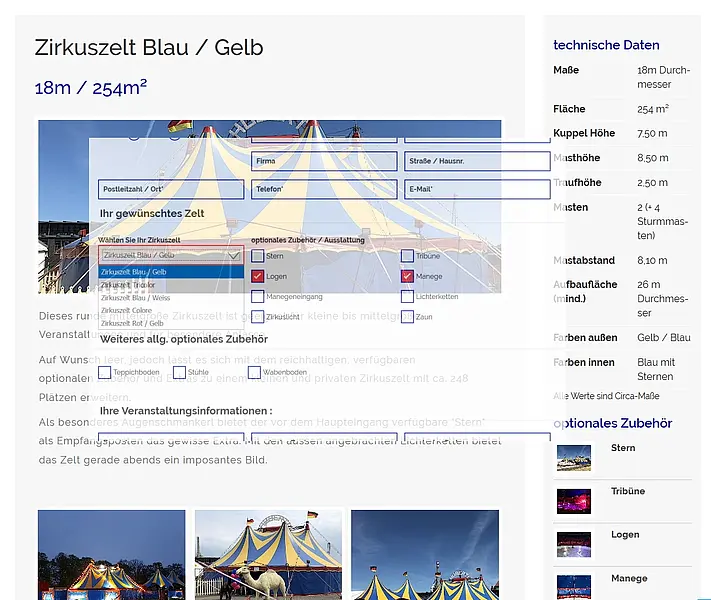
[Translate to English:] Listen-Darstellung von LKW-Ersatzteilen The truck spare parts dealer NTH wanted to make its (often) used spare parts available via a search function on its website. After programming the extension in TYPO3 9, I also made it compatible with TYPO3 11 at the beginning of 2022.
I implemented the search function using Ajax.
Example: DDR contemporary witness

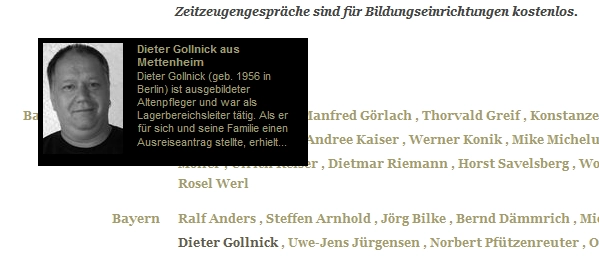
eine möglich Listen-Darstellung der selbst programmierten TYPO3-Erweiterung On the website DDR-Zeitzeuge.de, I created a TYPO3 extension for managing contemporary witnesses. The entries can be displayed and sorted in various lists, which then always enable an individual display of the individual addresses and a contact request via powermail.
Example: Tourism
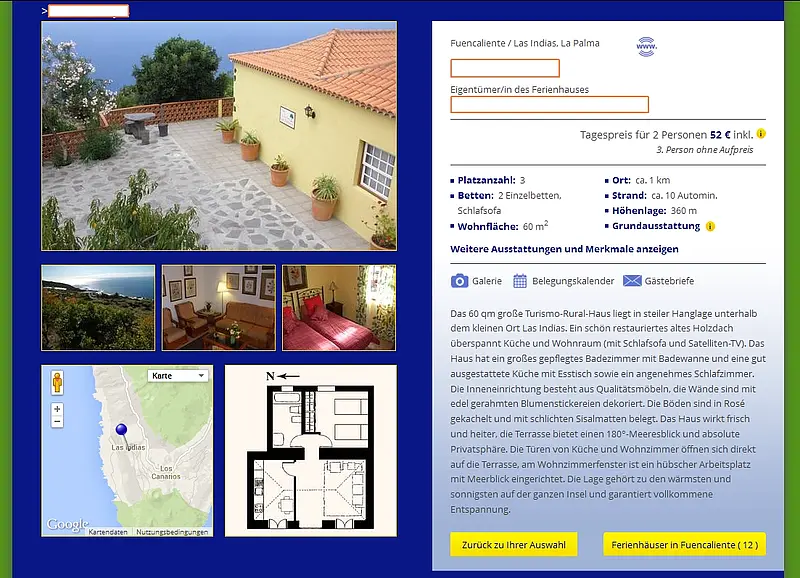
Angepasste Ferienhausdarstellung On a website that lists vacation rentals on three Canary Islands, I programmed an additional extension for the TYPO3 system to complement the TYPO3 extension Flat Manager. Among other things, this extension enables various search options, individual display of each vacation rental, and contact requests via powermail.
Only the occupancy calendar from the original extension is still used on this website.

![[Translate to English:] Listen-Darstellung von LKW-Ersatzteilen](/fileadmin/_processed_/6/8/csm_produkte_182051a29a.webp "[Translate to English:] Listen-Darstellung von LKW-Ersatzteilen")